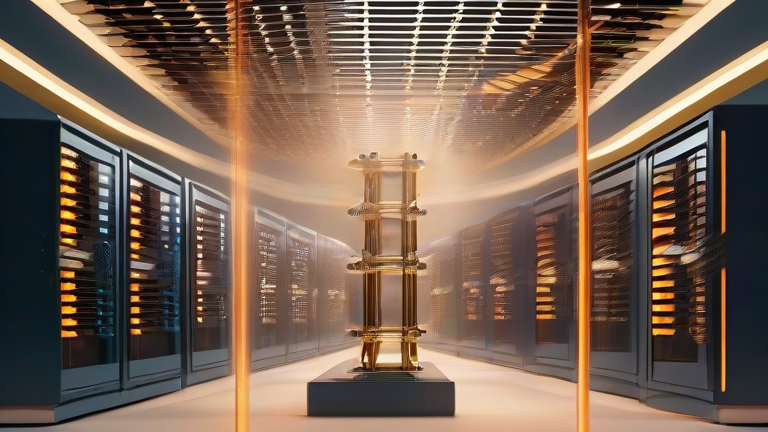
Quantum Computing Hits Commercial Viability: What It Means

For decades, quantum computing remained largely a theoretical exercise confined to academic laboratories and government research facilities. The dream of harnessing superposition and entanglement to solve problems intractable for classical supercomputers felt perpetually just over the horizon. However, the landscape has shifted dramatically in the last twelve months. We are no longer discussing the distant future; we are witnessing the dawn of commercial viability. This transition marks a pivotal moment in technological history, moving quantum mechanics from abstract physics to practical engineering.
The primary driver of this shift is the recent breakthrough in error correction and qubit stability. Early quantum processors were notorious for their fragility, losing coherence almost instantly due to environmental noise. Today’s leading commercial systems utilize topological qubits and advanced error-correcting codes that significantly extend operational lifespans. This stability allows for longer, more complex calculations, which is the holy grail for industries ranging from pharmaceuticals to financial modeling.
Feature Highlights of Next-Gen Systems
The latest commercial offerings boast several standout features that distinguish them from their predecessors. First, scalability is no longer a bottleneck. Modern architectures allow for the integration of thousands of logical qubits on a single cryogenic module, a massive leap from the dozens of noisy qubits seen just a few years ago. Second, the interface has been democratized. Cloud-based access portals now offer intuitive SDKs (Software Development Kits) that allow developers to write quantum algorithms in familiar languages like Python, lowering the barrier to entry for software engineers who were previously intimidated by the hardware specifics.
Third, hybrid processing capabilities have been refined. These systems seamlessly integrate with classical high-performance computing clusters, allowing for optimal task distribution. Classical computers handle general logic, while quantum processors tackle specific optimization or simulation tasks, resulting in a synergistic efficiency that neither could achieve alone.
Comparative Analysis: Classical vs. Quantum
When comparing these new commercial quantum systems to traditional supercomputers, the difference is stark. In drug discovery simulations, a classical supercomputer might take centuries to model the molecular interactions of a complex protein. A viable commercial quantum system