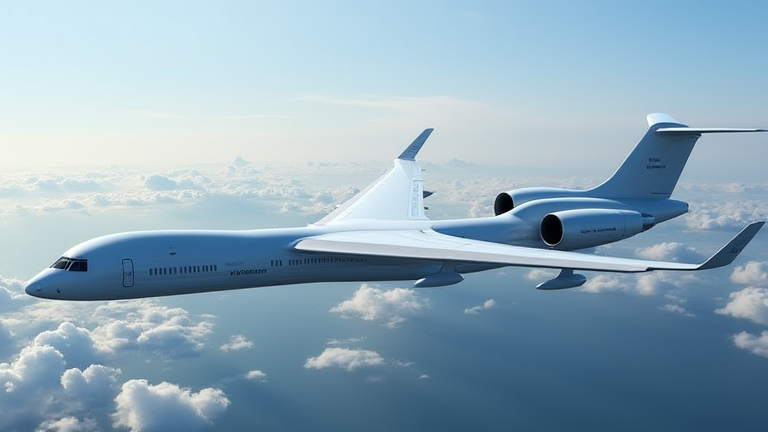
TL;DR: China is developing an 800-passenger flying wing aircraft to revolutionize aviation efficiency and reduce carbon emissions significantly. This ambitious project represents a strategic leap in aerospace engineering, aiming to dominate the future commercial market through superior aerodynamic design and advanced materials.
Redefining Commercial Aviation Efficiency
The aviation industry stands at a critical juncture where environmental regulations and fuel costs demand radical innovation. Traditional tube-and-wing designs have reached their aerodynamic limits, prompting manufacturers to look toward the blended wing body (BWB) or flying wing configuration. China’s latest initiative to develop an 800-passenger flying wing jet is not merely a technological showcase but a calculated business move to capture a significant share of the next-generation aircraft market. By integrating the fuselage into the lifting surfaces, this design promises a drag reduction of up to 30% compared to conventional narrow-body and wide-body jets. This efficiency translates directly to lower operational costs for airlines and a substantial decrease in carbon footprints, aligning perfectly with global decarbonization goals.
Market Analysis and Strategic Positioning
The global commercial aircraft market is projected to require over 40,000 new aircraft over the next two decades. However, the segment for ultra-large capacity aircraft remains underserved. Current offerings like the Airbus A380 and Boeing 747-8 have faced declining orders due to high operating costs and the industry’s shift toward point-to-point travel via smaller, more efficient twin-engine jets. China’s strategy leverages this gap by targeting high-density domestic routes and emerging international corridors where passenger volume justifies the massive capacity. The strategic insight here is to create a niche for “super-hubs,” allowing airlines to consolidate flights on major trunk routes, thereby reducing airport congestion and improving schedule reliability. Furthermore, the development of advanced composite materials and electric-hybrid propulsion systems will be crucial differentiators, positioning Chinese aerospace firms as leaders in sustainable technology rather than followers of Western design paradigms.
Case Studies in Innovation and Risk
Historical precedents offer valuable lessons. The Northrop Grummen B-2 Spirit demonstrated the viability of flying wing stealth technology, proving that such designs can be manufactured with precision. In the commercial realm, the Boeing X-48B experimental aircraft validated the aerodynamic benefits of BWB configurations, showing improved lift-to-drag ratios. However, the commercial application faces unique challenges, including passenger comfort, evacuation safety, and cabin pressurization logistics. A successful case study would involve a phased rollout, starting with cargo variants to refine logistics and supply chain management before transitioning to passenger configurations. This approach mitigates risk by allowing engineers to gather real-world data on structural integrity and maintenance requirements. Collaborations with major carriers can provide the necessary feedback loop to optimize cabin layouts and service interfaces, ensuring that the final product meets airline operational standards while delivering on its efficiency promises.
Conclusion
China’s entry into the 800-passenger flying wing segment signals a bold challenge to the duopoly of Airbus and Boeing. Success will depend not only on technological breakthroughs but also on building a robust ecosystem of suppliers, regulators, and airline partners. The potential rewards are immense, offering a path to sustainable, high-capacity air travel that could redefine global connectivity.
FAQ
Q: What is the primary advantage of the flying wing design?
A: The primary advantage is a significant reduction in aerodynamic drag, leading to up to 30% better fuel efficiency compared to traditional tube-and-wing aircraft.
If you want to dig deeper, check out our guide on Ultimate SEO Tutorial: Boost Rankings & Traffic in 10 Steps.
Q: When is the 800-passenger jet expected to enter service?
A: While exact dates are not public, industry experts estimate that commercial service could begin in the late 2030s or early 2040s after extensive testing and certification.
Q: How does this aircraft address environmental concerns?
A: By drastically reducing fuel consumption through superior aerodynamics and potentially integrating hybrid-electric propulsion, the jet aims to lower carbon emissions by a substantial margin compared to current wide-body jets.