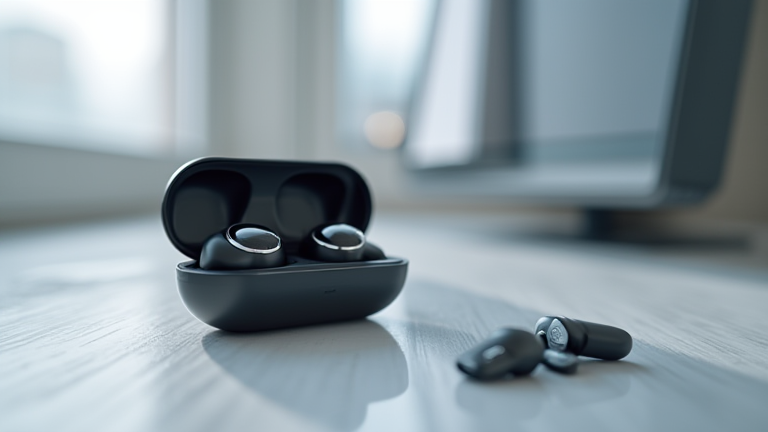
TL;DR: The wireless earbud market is currently dominated by adaptive noise cancellation and sophisticated transparency modes that allow users to seamlessly blend audio environments. Experts predict these features will become standard in premium devices, driven by consumer demand for immersive yet situational audio experiences.
Top 5 Wireless Earbuds Trends: Noise Cancellation & Transparency Mode
The global wireless earbuds market is experiencing explosive growth, projected to reach nearly $50 billion by 2026. This surge is largely fueled by advancements in audio processing technology, specifically regarding noise management. Consumers no longer just want isolation; they want control over their auditory environment. This shift has placed Active Noise Cancellation (ANC) and Transparency Mode at the forefront of product development.
If you want to dig deeper, check out our guide on US Number for German Client? Solve This Support Crisis Fast.
Industry leaders report that over 60% of new buyers prioritize noise cancellation as a primary purchase driver. Traditional ANC works by generating inverse sound waves to cancel out external noise. However, the latest trend is “Adaptive ANC,” which uses microphones to detect environmental noise in real-time. This technology automatically adjusts cancellation levels based on whether you are in a quiet office or a bustling subway station. This dynamic adjustment reduces the pressure sensation often associated with older ANC models, enhancing user comfort during long listening sessions.
Conversely, Transparency Mode has evolved from a simple passthrough feature to an intelligent audio window. Modern implementations use beamforming microphones to capture external sounds while still playing music. Some high-end models now offer “Voice Focus,” which enhances human speech frequencies while suppressing background chatter. This is particularly useful for professionals taking calls in noisy environments or individuals who need to stay aware of their surroundings for safety.
Market analysts predict that future iterations will integrate AI-driven personalization. Head-tracking sensors will adjust audio profiles based on ear shape and fit, ensuring optimal noise isolation. Furthermore, battery life improvements will allow these power-intensive features to run longer without compromising device longevity. As competition intensifies, brands that master the balance between isolation and awareness will capture the largest market share.
The convergence of health monitoring and audio processing is another emerging frontier. Future earbuds may detect stress levels through biometric sensors and adjust ANC intensity to promote relaxation. This holistic approach transforms earbuds from simple audio devices into comprehensive wellness tools. Consumers can expect smarter, more responsive audio experiences that adapt not just to the environment, but to their physiological state.
FAQ
Q: What is the main difference between traditional ANC and Adaptive ANC?
A: Traditional ANC uses a fixed level of noise cancellation, while Adaptive ANC constantly monitors and adjusts the cancellation intensity based on real-time environmental noise.
Q: How does Transparency Mode enhance user safety?
A: Transparency Mode allows external sounds to pass through the earbuds, enabling users to hear traffic, announcements, and conversations, which is crucial for situational awareness.
Q: What future technology is expected to improve noise cancellation?
A: AI-driven personalization and head-tracking sensors are expected to optimize noise cancellation by adapting to individual ear shapes and movements for superior isolation.