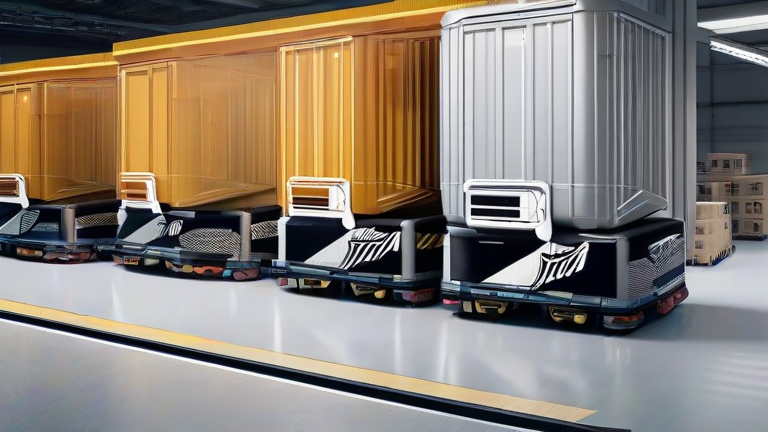
TL;DR: Zero-touch logistics is the end-to-end automation of warehouse operations where human intervention is minimized or eliminated, driven by AI, autonomous mobile robots (AMRs), and predictive software. The future of warehouse robotics is not just about replacing manual labor, but about creating a self-optimizing, resilient supply chain that scales with demand volatility.
Market Analysis: The Acceleration of Autonomous Fulfillment
The global warehouse robotics market is projected to surpass $12 billion by 2027, growing at a compound annual growth rate (CAGR) of nearly 14% from 2024. This surge is fueled by three macro-trends: persistent labor shortages (e-commerce turnover rates exceed 40% annually), rising consumer expectations for same-day delivery, and a 30% reduction in sensor costs over the last five years. Crucially, the shift is moving from “assisted automation” (e.g., goods-to-person picking) to “zero-touch” systems where robotic arms, AMRs, and drone inventory checks operate in a synchronized loop. Early adopters report up to 35% lower operational costs, but the real differentiator is data: zero-touch systems generate real-time throughput analytics that enable dynamic slotting and predictive maintenance, cutting unplanned downtime by 50%.
If you want to dig deeper, check out our guide on Neural Wearables: Real-Time Stress & Sleep Tracking.
Strategy Insights: Designing for “Flow” Not Function
Successful zero-touch implementation is less about buying the most advanced robots and more about redesigning the facility’s digital skeleton. Strategy one: adopt a “software-first” orchestration layer—a central AI that assigns tasks based on real-time congestion, battery levels, and order priority. This prevents the classic bottleneck of robots colliding or waiting idle. Strategy two: modular deployment. Instead of a massive CapEx overhaul, leading firms pilot zero-touch in a single zone (e.g., pallet staging) and scale incrementally. Strategy three: integrate robotic process automation (RPA) for administrative tasks—like automated receiving scans and dynamic routing—so that physical and digital workflows are truly touchless. Finally, invest in “human-in-the-loop” exception handling only for edge cases (e.g., damaged goods), not routine picks.
Case Studies: Proof Points in the Field
Case 1: Ocado’s Swarm Intelligence. The UK-based grocer operates one of the world’s most advanced zero-touch warehouses. Over 1,000 robots on a grid system move product crates using a 3D “hive” model. Their software predicts order completion times within 90-second windows, achieving 99.7% order accuracy with zero manual picking. The lesson: seamless coordination beats raw robotic speed.
Case 2: Geodis’ 3PL Adaptive Pilot. Geodis deployed AMRs with integrated robotic arms for case picking at a Texas facility. By using computer vision to handle non-standard SKUs, they reduced labor hours by 60% in the high-velocity zone while maintaining a 99.5% fill rate. Their strategy was to target “heavy, repetitive, low-value” tasks first, freeing human workers for quality control.
FAQ
Q: Will zero-touch logistics eliminate all warehouse jobs?
A: No. It eliminates repetitive, physically demanding tasks, but creates new roles in robot supervision, data analytics, and system maintenance. Most operators upskill existing staff, shifting them from manual picking to exception-handling and fleet management.
Q: What is the typical ROI timeline for a zero-touch system?
A: For mid-sized warehouses (100k–500k sq ft), ROI is typically 18–30 months. This assumes a phased deployment and existing WMS integration. High-volume e-commerce centers often see payback in under 12 months due to reduced peak-season overtime costs.
Q: What is the biggest hidden risk in going zero-touch?
A: Software integration complexity. Legacy WMS/ERP systems often lack APIs for real-time robot control. The biggest failure point is not the hardware, but the digital backbone—ensure you run a “connectivity audit