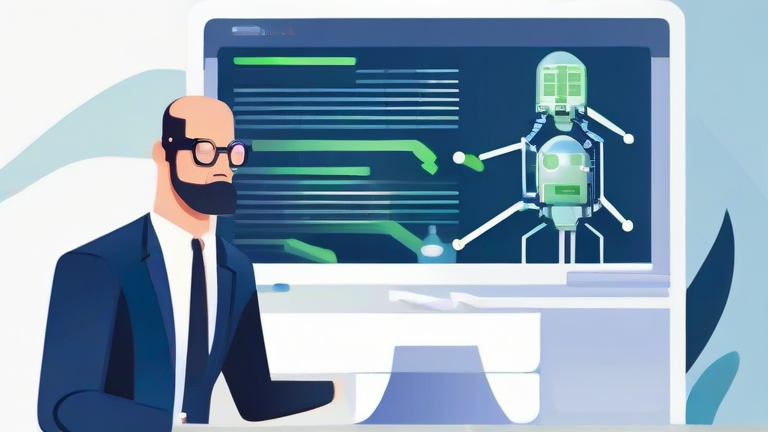
TL;DR: AI agents manage enterprise workflows autonomously by decomposing complex tasks into executable sub-tasks, utilizing large language models to interpret natural language instructions and dynamically selecting appropriate tools. They operate in a closed-loop feedback system, continuously monitoring execution results and self-correcting errors without human intervention until the final objective is achieved.
The Rise of Autonomous Orchestrators
The landscape of enterprise software is undergoing a seismic shift. We are moving beyond simple chatbots that answer questions to sophisticated AI agents that actually perform work. These agents do not just assist; they orchestrate. By leveraging advanced reasoning capabilities, they can navigate complex enterprise Resource Planning (ERP) systems, Customer Relationship Management (CRM) platforms, and internal databases to complete multi-step processes. This autonomy is not merely about speed; it is about adaptability. When a workflow encounters an unexpected error, such as a missing data field or an API timeout, the agent does not simply halt. Instead, it analyzes the error, consults its knowledge base, and attempts a remediation strategy, only escalating to human oversight if all automated recovery paths fail.

Technical Specifications and Capabilities
Modern AI agents rely on a stack that includes Large Language Models (LLMs) for reasoning, Retrieval-Augmented Generation (RAG) for accessing proprietary enterprise data, and function calling APIs to interact with external software. The specifications required for these systems are rigorous. They need low-latency inference engines to ensure real-time decision-making and robust security protocols to handle sensitive corporate data. Key capabilities include persistent memory, allowing the agent to remember context across long-running workflows, and multi-modal processing, enabling it to interpret emails, spreadsheets, and images alike. Furthermore, these agents often utilize “tool use” frameworks, where they can dynamically choose from a library of available actions, such as sending an email, updating a SQL database, or triggering a webhook. This modular approach ensures that the agent remains flexible and scalable as enterprise needs evolve.
Industry Impact and Future Outlook
The impact on industries is profound. In supply chain management, autonomous agents monitor inventory levels, predict shortages, and automatically place orders with vendors, reducing waste and downtime. In finance, they reconcile transactions in real-time, flagging anomalies for review while automating the mundane aspects of auditing. This shift reduces operational costs significantly, allowing human employees to focus on strategic initiatives rather than repetitive administrative tasks. However, this transformation requires careful governance. Enterprises must implement rigorous oversight mechanisms to ensure that autonomous decisions align with compliance standards and ethical guidelines. As these technologies mature, we will see a new breed of workforce collaboration emerge, where humans and AI agents work in tandem, each leveraging their unique strengths to drive efficiency and innovation. The future of work is not about replacement, but about augmentation through intelligent automation.
FAQ
Q: What is the difference between a standard AI chatbot and an AI agent?
A: A standard chatbot primarily generates text responses based on prompts, whereas an AI agent can take autonomous actions, use tools, and execute multi-step workflows to achieve specific goals without constant human direction.
If you want to dig deeper, check out our guide on Real-Time Biofeedback in Mental Health Apps: What You Need t.
Q: How do AI agents handle errors during workflow execution?
A: AI agents utilize self-correction loops where they analyze error messages, attempt alternative solutions or parameter adjustments, and only escalate to human operators if the error persists or exceeds predefined safety thresholds.
Q: Is it safe to use AI agents for sensitive enterprise data?
A: Yes, provided that robust security measures like encryption, role-based access control, and audit logging are implemented. Modern enterprise AI agents are designed to operate within strict compliance frameworks to protect data integrity and privacy.