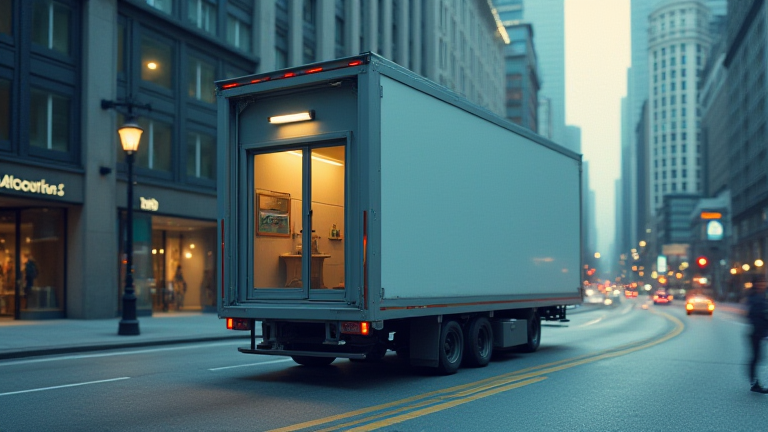
TL;DR: Autonomous delivery robots dominate last-mile logistics by offering unparalleled cost efficiency and scalability for high-density urban routes. Their ability to operate 24/7 without fatigue significantly reduces operational expenses while enhancing customer satisfaction through precise, contactless delivery windows.
The Last-Mile Revolution
The final leg of the supply chain has long been the most expensive and inefficient component of logistics, often accounting for more than 50% of total shipping costs. However, the emergence of autonomous delivery robots is fundamentally reshaping this landscape. By leveraging advanced sensor fusion, machine learning algorithms, and real-time navigation systems, these robotic units are solving the complex puzzle of urban navigation with precision that human drivers struggle to match consistently.
If you want to dig deeper, check out our guide on 10 Proven Business Growth Strategies for 2024.
Market Analysis and Strategic Insights
The market for autonomous delivery solutions is projected to grow exponentially, driven by the relentless rise of e-commerce and consumer demand for instant gratification. Companies are not just adopting these technologies for novelty; they are integrating them into core strategic frameworks to reduce carbon footprints and labor dependencies. The key strategic insight here is hybridization: successful logistics providers are combining autonomous robots for local, low-volume deliveries with traditional fleet vehicles for bulk transport. This synergistic approach optimizes resource allocation, ensuring that human drivers handle complex routes while robots manage repetitive, short-distance drops.
Furthermore, regulatory landscapes are evolving to support these innovations. Cities are creating designated “micro-mobility” lanes and updating traffic laws to accommodate sidewalk-based vehicles. This regulatory tailwind reduces operational friction, allowing companies to scale their fleets faster than anticipated. The data generated by these robots also provides invaluable insights into urban traffic patterns, enabling retailers to optimize inventory placement and predict delivery demand with greater accuracy.
Case Studies in Success
Companies like Starship Technologies and Nuro have pioneered this space, demonstrating tangible success. Starship’s six-wheeled robots have completed millions of deliveries for major grocery chains in North America and Europe, achieving a customer satisfaction rate that rivals traditional courier services. Their model proves that reliability is achievable at scale. Meanwhile, Nuro’s focus on purpose-built, enclosed vehicles highlights a different strategy: prioritizing cargo security and speed in suburban environments where pedestrian traffic is lower. These case studies illustrate that there is no one-size-fits-all solution; rather, success depends on aligning robotic capabilities with specific geographic and demographic contexts.
FAQ
Q: Are autonomous delivery robots safe for pedestrians?
A: Yes, they are equipped with multiple LiDAR, cameras, and ultrasonic sensors to detect obstacles and pedestrians, ensuring safe navigation in shared spaces.
Q: How do these robots handle adverse weather conditions?
A: Most modern robots are designed to operate in rain and snow, though extreme conditions may temporarily suspend operations to ensure safety and battery longevity.
Q: What is the primary cost advantage of using robots?
A: The main advantage is the reduction in labor costs and the ability to operate 24/7, significantly lowering the cost per delivery compared to human-driven vehicles.