
Urban Vertical Farming Scales for Global Food Security
As urban populations swell and arable land shrinks, vertical farming has emerged not merely as a novelty, but as a critical pillar of global food security. This innovative agricultural paradigm, which involves growing crops in vertically stacked layers within controlled environments, is rapidly transitioning from experimental pilot projects to large-scale commercial operations. The urgency of this shift is underscored by the United Nations, which predicts that by 2050, nearly 68% of the world’s population will reside in urban areas, placing unprecedented pressure on traditional supply chains.
Recent market analysis highlights the explosive growth trajectory of this sector. The global vertical farming market, valued at approximately $4.2 billion in 2023, is projected to reach $12.5 billion by 2030, expanding at a compound annual growth rate (CAGR) of over 25%. This surge is driven by advancements in LED technology, which have significantly reduced energy consumption, and the integration of artificial intelligence for precision agriculture. According to a recent report by Grand View Research, the Asia-Pacific region is leading this adoption, with countries like Japan, South Korea, and China investing heavily in automated farming infrastructure to mitigate food import dependencies.
If you want to dig deeper, check out our guide on Top 10 Trends Shaping 2024: What You Need to Know Now.
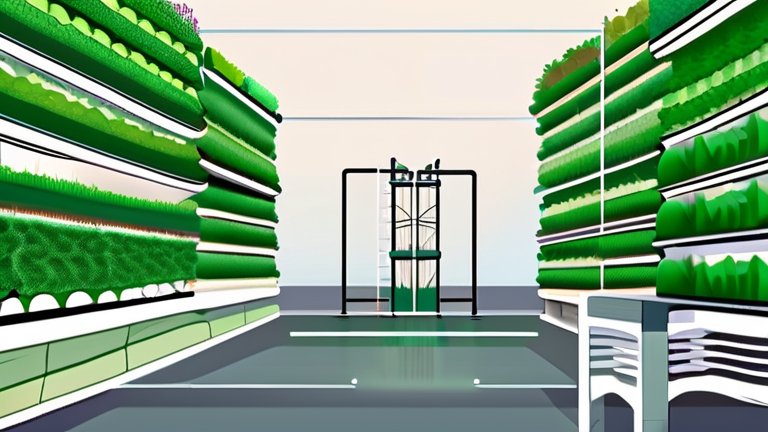
Industry experts emphasize that the true value of vertical farming lies in its resilience. “We are no longer just talking about yield per square foot; we are talking about yield per calorie consumed with minimal environmental footprint,” explains Dr. Elena Rossi, a senior agronomist at the Institute for Sustainable Agriculture. She notes that vertical farms use up to 95% less water than traditional farming and eliminate the need for pesticides entirely. Furthermore, by locating farms within city limits, transportation emissions are drastically reduced, ensuring fresher produce and lower carbon footprints.
Looking ahead, the industry faces challenges, particularly regarding energy costs and initial capital expenditure. However, future predictions suggest that renewable energy integration and economies of scale will soon make vertical produce price-competitive with conventional crops. Innovations in crop selection, expanding beyond leafy greens to include strawberries, tomatoes, and even wheat, promise to diversify urban food sources. As technology matures and investment