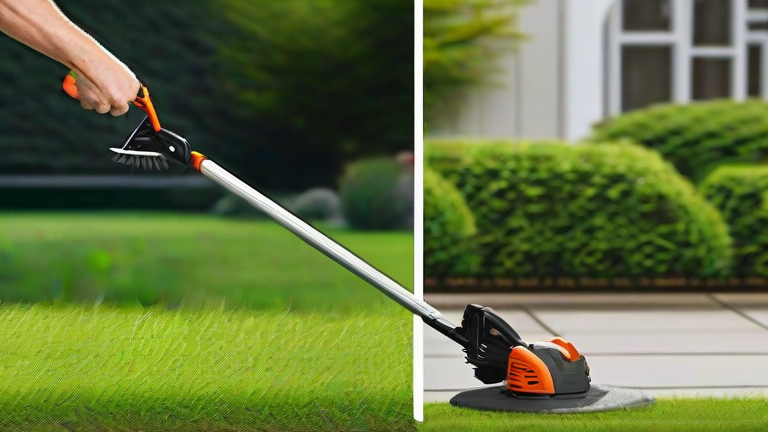
TL;DR: Buy a string trimmer if you need speed and versatility for edging, fence lines, and large lawns; buy a weeder (manual or electric) if your priority is precision removal of deep-rooted weeds in garden beds with zero collateral damage. For most homeowners with mixed terrain, a trimmer is the primary tool, but a dedicated weeder is the indispensable finisher.
The Evolution of Both Tools
The string trimmer, once a simple gas-powered spinning nylon line, has undergone a quiet revolution. Brushless motors now dominate the premium electric segment, delivering 40–60% more torque and runtime than brushed predecessors. Brands like EGO and Husqvarna have introduced auto-feed heads that sense line wear and eject fresh filament without a manual bump—a sore point that plagued users for decades. Meanwhile, battery platforms have standardized on 40V–82V systems, with 4.0–8.0 Ah packs enabling 60+ minutes of continuous trimming under load. The latest spec war centers on “line gauge”: 0.095-inch twisted lines are now common, offering better cutting speed on thick grasses without bogging down.
If you want to dig deeper, check out our guide on Hollywood Creatives Train AI to Replace Themselves: A Grave .
The Weeder’s Quiet Comeback
On the weeder side, innovation has shifted from brute force to ergonomics and root extraction. Manual weeders now feature serrated, V-shaped blades with a fulcrum pivot—like the Grampa’s Weeder—that can pull dandelion taproots up to 8 inches deep with a single lever motion. The newest electric weeders, such as the Greenworks 24V Cordless Cultivator, use oscillating tines to break soil crust without slicing neighboring plants. But the real industry disruptor is the “thermal weeder”: a propane-powered infrared unit that zaps weeds in 0.3 seconds, killing the plant and root crown without soil disturbance. While these run $150–$300, they’ve gained traction in organic landscaping, where chemical herbicides are banned.
Specs That Matter in 2025
When comparing, focus on three metrics. For trimmers: cutting swath width (15–18 inches is optimal), line feed speed (faster = fewer stops), and vibration dampening (measured in m/s²; below 5 m/s² is wrist-friendly). For weeders: extraction depth (6–10 inches), handle height adjustability (critical for back strain), and for powered units, tine speed (measured in RPM, with 300–400 RPM ideal for breaking compacted soil). Industry impact: the global lawn care tools market is shifting from gas to battery at a 9.2% CAGR, driven by California’s 2024 small-engine emissions ban, which has forced major brands like Stihl and Ryobi to retire gas trimmers entirely from state catalogs.
The Verdict
Your choice hinges on terrain. For a 0.5-acre suburban lawn with sidewalks and beds, a 40V brushless trimmer with a 17-inch swath is non-negotiable. But for a raised vegetable garden or rock garden where trimmer line would shred basil or chip pavers, a manual stand-up weeder outperforms every powered tool—no noise, no kickback, and zero risk of “weed whipping” your prized perennials. Pros run both: trimmer for bulk, weeder for the final 10% of stubborn roots.
FAQ
Q: Can I use a string trimmer to remove deep taproots like dandelions?
A: No. A trimmer only cuts the surface foliage, leaving the root intact, so the weed regrows within 7–10 days. A weeder physically extracts the root, ensuring permanent removal.
Q: Are battery-powered weeders strong enough for clay soil?
A: Yes, but only with oscillating tines rated at 350+ RPM and a torque-boost mode. For heavy clay, a manual fulcrum weeder often works better because it leverages your body weight, avoiding motor stall.
Q: Is the thermal we