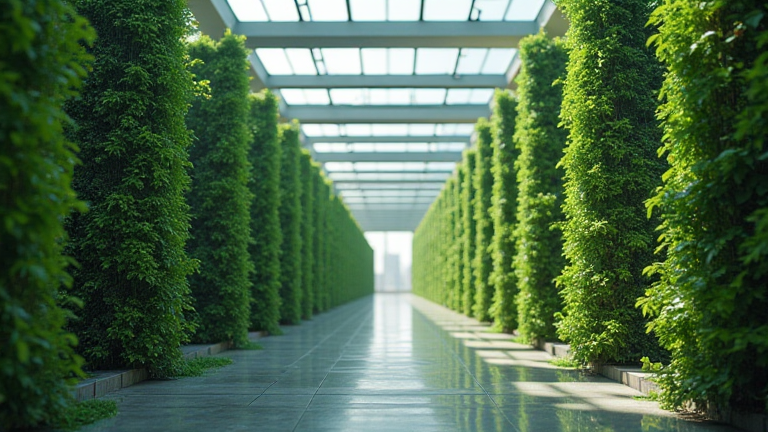
TL;DR: Vertical farming reduces urban water consumption by approximately 95% compared to traditional agriculture by utilizing closed-loop hydroponic systems. This revolutionary method recycles water continuously, ensuring minimal waste while maximizing crop yield in dense metropolitan environments.
The Green Revolution in the Sky
As urban populations swell and arable land shrinks, the traditional agricultural model faces an existential crisis. Enter vertical farming, a technological marvel that is reshaping how we think about food production. By stacking crops in vertically inclined layers, often in controlled environments like warehouses or skyscrapers, these facilities achieve what open-field farming cannot: absolute efficiency. The headline statistic is staggering: a 95% reduction in water usage. But how does this miracle happen? It starts with hydroponics. Unlike soil-based farming, which loses vast amounts of water to evaporation and runoff, hydroponic systems deliver nutrient-rich water directly to plant roots. Any excess water is captured, filtered, and recirculated. This closed-loop system ensures that nearly every drop is utilized, drastically cutting the overall footprint.
Feature Highlights and Comparisons
Modern vertical farms are not just about saving water; they are about precision. LED lighting systems mimic the perfect solar spectrum, accelerating growth cycles by up to 40%. This means faster harvests and consistent quality year-round, regardless of external weather conditions. When compared to conventional farming, the differences are stark. Traditional lettuce requires hundreds of gallons of water per pound produced. Vertical farms need less than five gallons. Furthermore, the elimination of pesticides is a significant health benefit, as the sterile indoor environment keeps pests at bay naturally. Critics often point to the high energy costs of artificial lighting, but advancements in renewable energy integration and energy-efficient LEDs are rapidly closing this gap. The initial investment is high, but the long-term savings on water, transport, and spoilage make it a viable economic model for forward-thinking cities.
Join the Movement
The future of food is local, efficient, and sustainable. By supporting vertical farming initiatives, we contribute to a greener planet and more resilient food systems. Whether you are a consumer looking for cleaner produce or an investor seeking sustainable opportunities, the choice is clear. Explore local vertical farms in your area and demand transparency in your food supply chain. Together, we can cultivate a future where nature and technology thrive in harmony.
FAQ
Q: Is vertical farming expensive for consumers?
A: Initially, prices may be higher due to technology costs, but they are decreasing as the industry scales and efficiency improves.
If you want to dig deeper, check out our guide on Sustainable Fashion Drives the Circular Economy.
Q: Do vertical farms use any soil?
A: No, most vertical farms use hydroponics, aeroponics, or aquaponics, which eliminate the need for soil entirely.
Q: Can vertical farms grow all types of crops?
A: They are currently best suited for leafy greens, herbs, and strawberries, though research is expanding into larger fruiting plants.