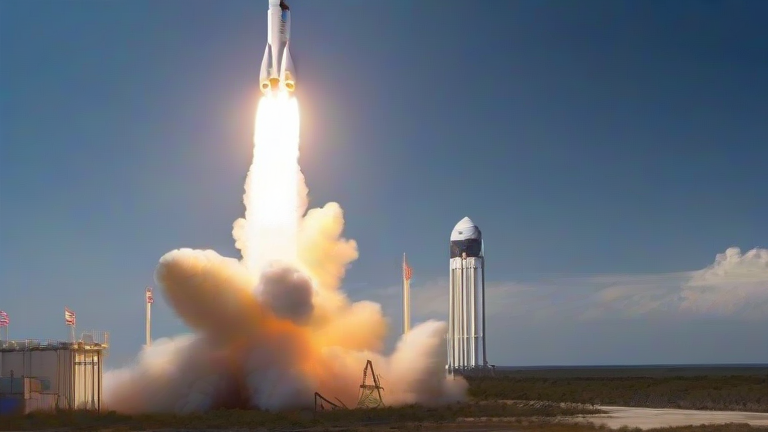
US Rocket Launches: Why Daily Flights Are Just the Beginning
TL;DR: Daily rocket launches are not a technological endpoint but the critical foundation for scalable space infrastructure. This frequency enables the economic viability of orbital data centers, lunar supply chains, and interplanetary logistics, transforming space from an exclusive domain into a standard industrial sector.
Market Analysis: The Shift to Industrial Scale
The commercial space sector is undergoing a paradigm shift from project-based execution to continuous industrial operations. For decades, the space industry operated on a “big bang” model, where launches were infrequent, expensive, and high-risk. However, the advent of reusable launch vehicles has drastically reduced the marginal cost per kilogram to orbit. Market analysts project that the global space economy will surpass two trillion dollars by 2030, driven not by tourism or defense alone, but by the massive infrastructure build-out required for next-generation satellite constellations. Daily flights are the prerequisite for this growth. Without the ability to launch with the reliability and frequency of air traffic, the deployment of thousands of satellites for broadband, Earth observation, and navigation would remain economically unfeasible. The market is no longer asking if space is accessible; it is asking how quickly we can populate it with assets that generate recurring revenue. This shift demands a supply chain that operates on weekly, rather than yearly, cycles, fundamentally altering procurement, manufacturing, and maintenance strategies for all stakeholders involved.
If you want to dig deeper, check out our guide on Monday Mentorship: Ask Anything About Our AI Analytics Dashb.
Strategy Insights: Vertical Integration and Standardization
To achieve daily launch cadence, companies must adopt strategies that prioritize standardization and vertical integration. The most successful players are those who control the entire value chain, from propulsion systems to ground infrastructure. By standardizing rocket designs, manufacturers can achieve economies of scale that drive down costs further. For instance, modular rocket engines allow for rapid production and interchangeability, reducing turnaround times between launches. Furthermore, strategy must shift from maximizing payload per launch to maximizing launch frequency. A smaller rocket that flies every day is often more valuable than a larger rocket that flies once a month, as it provides continuous access to orbit. This requires a cultural shift within aerospace companies, moving away from the “one-shot” perfectionism of the past toward agile, iterative development processes. Investors are now looking for metrics based on flight frequency and turnaround time, rather than just payload capacity. Companies that fail to adapt to this operational rhythm risk being marginalized by competitors who can offer more predictable and cheaper access to space. The strategic imperative is clear: reliability and frequency are the new currency of space dominance.
Case Studies: Lessons from the Leaders
SpaceX provides the clearest case study in this transition. By achieving rapid reusability and high launch cadence, the company has demonstrated that daily flights are not just a goal but a current reality for certain vehicle classes. This has forced competitors like Rocket Lab and ULA to rethink their models. Rocket Lab, for example, has focused on smaller, frequent launches to serve the small satellite market, proving that high-frequency access is viable even without super-heavy lift capabilities. Meanwhile, traditional aerospace giants are struggling to adapt, often relying on legacy systems that cannot support the required turnaround times. These examples highlight that the future belongs to those who can treat rocket launches as routine operations. The data shows a clear correlation between launch frequency and market share, suggesting that the winners of the next decade will be those who have mastered the art of the daily flight. As we look toward Mars and beyond, the foundation will be laid not by a single giant leap, but by millions of small, daily steps into orbit.
FAQ
Q: Why is daily flight frequency important for space economy?
A: It lowers the cost per unit of access to orbit, making large-scale satellite deployments and space-based industries financially viable.
Q: What role does reusability play in achieving daily launches?
A: Reusability drastically reduces turnaround time and costs, allowing rockets to be refueled and relaunched quickly, which is essential for high-frequency operations.
Q: How will this affect traditional aerospace companies?
A: Traditional firms