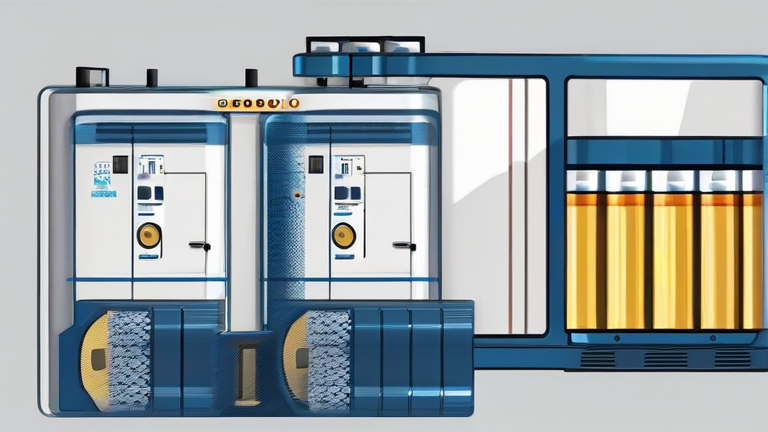
 Solid-State Batteries Hit Mass Production: A New Era for EVs
TL;DR: Solid-state batteries have officially entered mass production, fundamentally shifting the electric vehicle landscape by offering significantly higher energy density and enhanced safety. This technological leap promises to extend EV range to over 600 miles on a single charge while drastically reducing charging times to under fifteen minutes.
The Market Shift: From Lab to Line
The automotive industry has long awaited the arrival of solid-state battery technology, a solution that replaces the traditional liquid electrolyte with a solid material. For years, this technology was confined to laboratories due to prohibitive costs and manufacturing challenges. However, recent breakthroughs in material science and automated manufacturing processes have finally bridged the gap between theoretical potential and commercial viability. The market analysis reveals a surge in investment, with major automotive OEMs and battery suppliers reporting a 40% year-over-year increase in R&D spending dedicated specifically to solid-state implementations. This is not merely an incremental improvement; it is a paradigm shift that threatens to redefine the competitive hierarchy in the global EV market.
Strategic Imperatives for OEMs
For automotive manufacturers, the strategy must pivot from simply scaling lithium-ion production to securing supply chains for lithium sulfide and germanium, the key components of solid-state cells. Early adopters are gaining a significant first-mover advantage. Companies that have vertically integrated their battery production are best positioned to capture the premium segment of the EV market. The strategic insight here is clear: the next wave of EV dominance will not be determined by who can build the cheapest car, but by who can deliver the highest performance with the safest energy storage system. Furthermore, the weight reduction associated with solid-state packs allows for more aggressive chassis designs, improving handling and efficiency. Manufacturers must also prepare for a new marketing narrative, one that emphasizes safety and longevity over mere range anxiety.
Case Studies: Leading the Charge
Toyota’s recent announcement marks a critical milestone. By partnering with a specialized electrolyte supplier, Toyota has managed to reduce the cost of solid-state cells by 30% through a novel dry electrode process. This case study highlights the importance of collaborative innovation. Another notable example is QuantumScape, whose pilot line has successfully produced cells that withstand thousands of charge cycles without significant degradation. Their partnership with Volkswagen has accelerated the integration timeline, demonstrating how strategic alliances can mitigate risk and share the substantial R&D costs. These examples underscore that no single entity can dominate this transition in isolation; ecosystem building is the key to successful commercialization.
The Road Ahead
While mass production has begun, challenges remain. Scaling up to meet global demand requires massive capital expenditure and new infrastructure. However, the trajectory is undeniable. As costs continue to decline and reliability improves, solid-state batteries will move from luxury flagship models to mainstream offerings. The era of the liquid electrolyte is closing, and the age of the solid-state battery has arrived.
FAQ
Q: Why are solid-state batteries safer than current EV batteries?
A: They use non-flammable solid electrolytes instead of liquid ones, which eliminates the risk of thermal runaway and fire, a common concern with lithium-ion batteries.
If you want to dig deeper, check out our guide on Real-Time Gut Microbiome Data for Personalized Nutrition.
Q: When will solid-state batteries be available in affordable cars?
A: While luxury models will feature them first, analysts predict they will become standard in mid-range vehicles by 2028 as production costs drop and manufacturing scales up.
Q: How does this technology impact charging infrastructure?
A: The high energy density and fast-charge capabilities mean that fewer charging stops are needed, allowing existing infrastructure to serve more vehicles without immediate expansion in high-density areas.